New Offer
Receive [your product here]
Describe what benefits the customer will get from your offer.


Written by Philip Ogina
What changed is the arrival of tangible evidence that the Iran war is already transmitting into the real economy through both softer activity and higher costs. The services sector, which accounts for roughly two-thirds of US GDP, lost momentum faster than expected in March. Business activity dropped notably, new orders held up better but employment fell into contraction, and supplier deliveries slowed amid shipping disruptions and flight issues linked to Middle East tensions and winter weather.
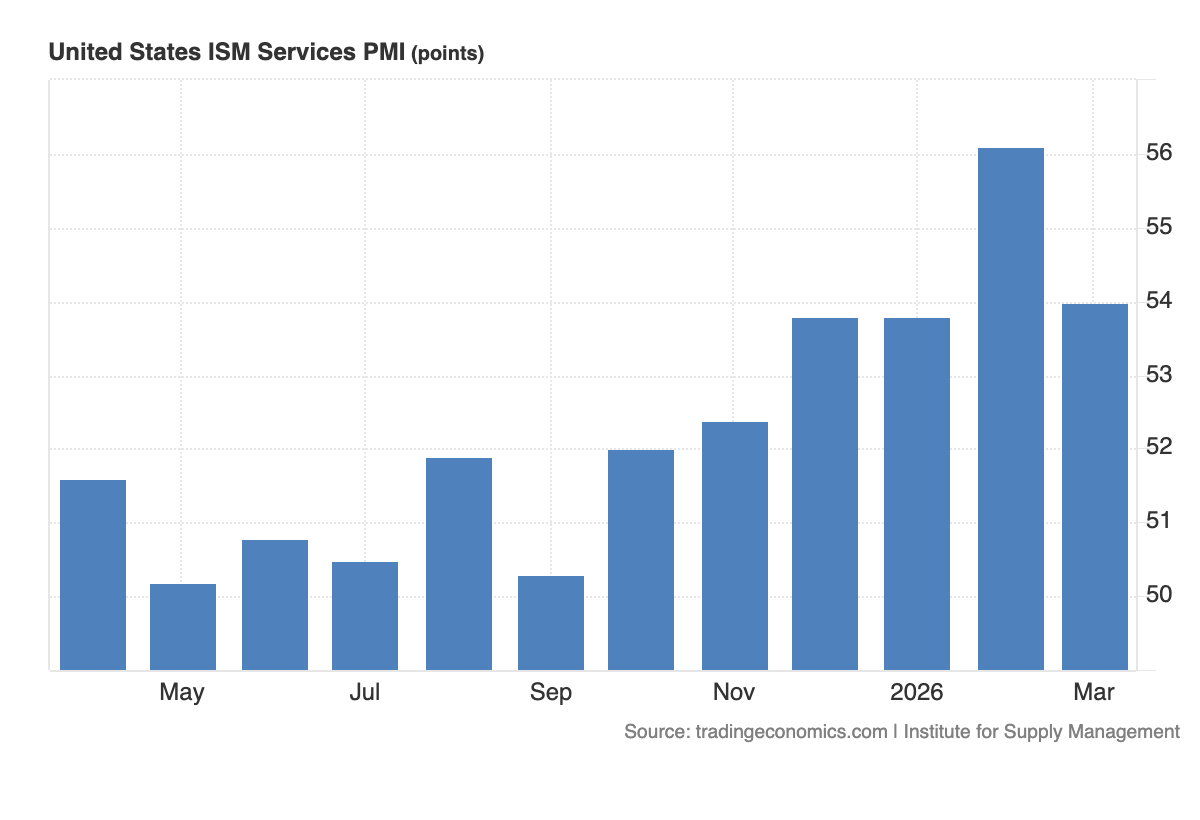
Why now? The timing aligns with the persistence of elevated oil prices stemming from Strait of Hormuz risks and related supply concerns. Businesses explicitly flagged adjustments due to the conflict and the anticipated pass-through of higher energy costs. This comes just weeks after the March FOMC held rates steady at 3.50-3.75 percent and revised its 2026 inflation projections higher, even as it kept a single rate cut on the table for the year. The data reinforces that the energy shock is not abstract. It is beginning to weigh on hiring and activity while pushing input costs higher at a time when core inflation remains sticky.
Why does it matter? This report sharpens the dilemma facing the Federal Reserve. Softer services activity and an employment drop could ordinarily open the door for easier policy, especially alongside recent payroll softness. Yet the sharp rise in prices paid creates the opposite pressure. The Fed’s reaction function is now caught between slowing growth signals and renewed inflation risks channeled through oil. Policymakers have already acknowledged uncertainty from the war. This print makes clear that the inflation channel remains live and could delay or limit any cuts well into 2026.
Transmission is straightforward: sustained geopolitical disruption around Iran keeps oil elevated, which feeds directly into higher business costs in services, lifts headline inflation expectations, and constrains the central bank from responding aggressively to weaker activity. As a result, the dollar finds ongoing support from reduced easing bets, yields hold firmer on persistent rate expectations, and risk sentiment stays selective with energy and defense sectors outperforming while broader multiples face pressure from higher discount rates. Gold continues to face crosswinds, with safe-haven demand offset by real yield strength.
The bottom line is that the Fed remains data-dependent but geopolitically boxed in. A single cut in 2026 still appears in the dot plot, yet markets have already scaled back probabilities as inflation risks from energy refuse to fade. Until the oil premium clearly dissipates or the conflict de-escalates meaningfully, policy will stay restrictive relative to what softer growth alone might justify. The April FOMC and upcoming inflation readings will be critical tests of whether this stagflation-like mix forces officials to stay on hold longer than previously signaled.
Trump Rhetoric Extends Uncertainty: Dollar Gains as Fed Easing Bets Fade
Two-Week Ceasefire Window Lifts Gold, Eases Oil and Inflation Risks
Session expired
Please log in again. The login page will open in a new tab. After logging in you can close it and return to this page.