New Offer
Receive [your product here]
Describe what benefits the customer will get from your offer.


Written by Philip Ogina
What changed is the rapid shift from fragile hopes of negotiation to outright escalation in the Persian Gulf. Weekend talks in Pakistan collapsed without agreement. The United States accused Iran of refusing to curb its nuclear ambitions, while Iran demanded control of the strait, war reparations, a broader regional ceasefire including Lebanon, and access to frozen assets. In response, President Trump ordered a blockade of the Strait of Hormuz, restricting maritime traffic to Iranian ports and tightening the choke point that had already seen limited flows since the conflict began.
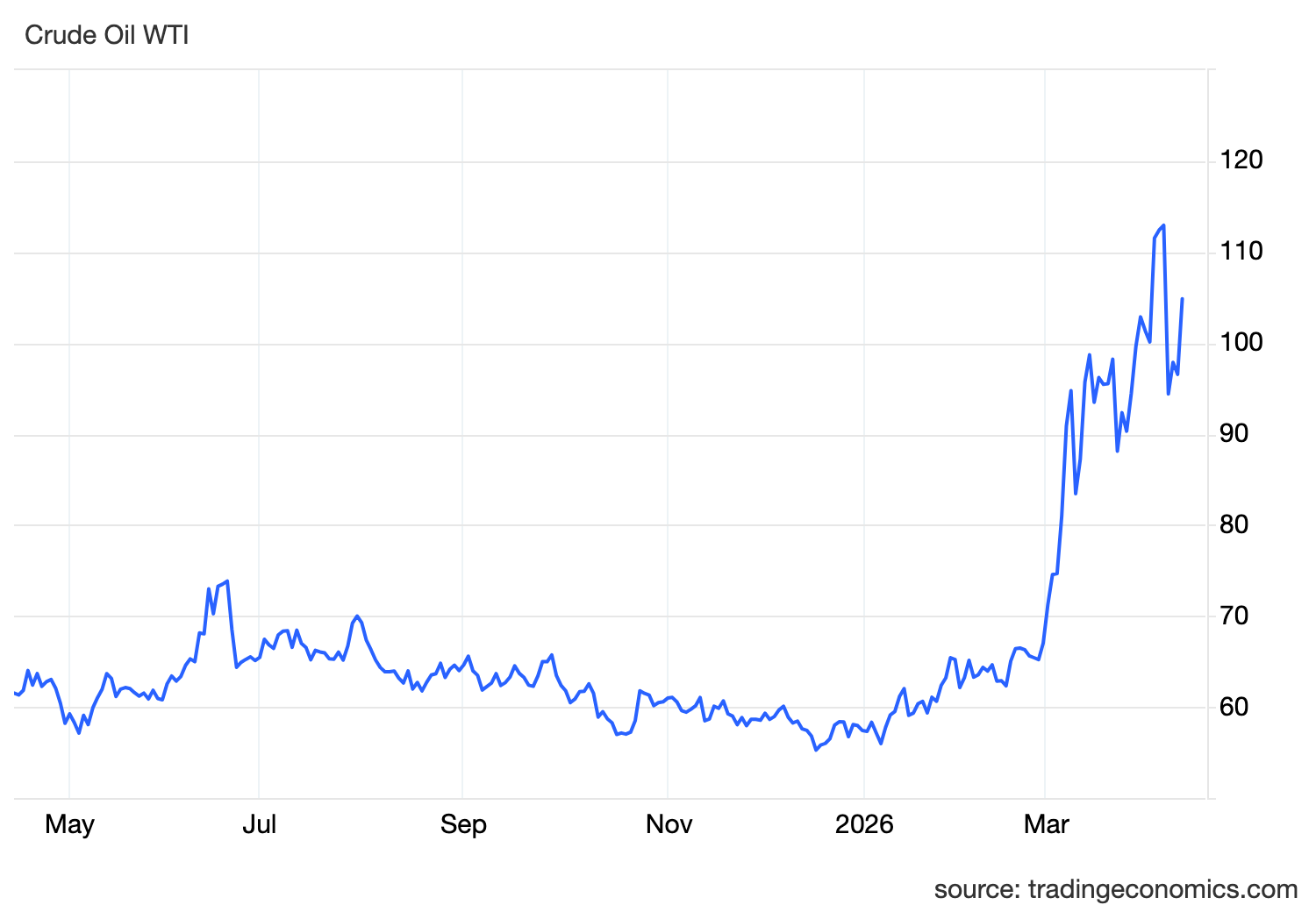
The timing reflects repeated failed attempts at de-escalation and comes amid ongoing disruptions that have kept the key shipping route largely closed. Oil markets reacted sharply, with WTI climbing aggressively to recoup recent losses and push above 105 dollars. Saudi Arabia offered some relief by announcing full restoration of its East-West pipeline capacity to around seven million barrels per day and recovering output from the Manifa field after earlier attacks. Yet the US blockade adds a new layer of enforcement and uncertainty, sustaining the supply premium even with incremental non-OPEC or alternative routing capacity.
This matters because the Federal Reserve’s reaction function tightens once again. Recent FOMC minutes already highlighted elevated two-sided risks: upside inflation threats from persistent energy costs that could pass through to core measures, and downside employment risks from slower global activity. The fresh oil surge amplifies the inflation channel at a moment when softer services activity and employment signals would otherwise lean toward easing. Policymakers had held rates at 3.50 to 3.75 percent and projected one cut in 2026, but the blockade raises the bar for any near-term relaxation. Markets are repricing fewer or later cuts, supporting the dollar through interest-rate differentials and keeping yields from falling sharply.
The chain of transmission is clear. A US blockade of Hormuz tightens effective supply constraints. Oil prices remain above 100 dollars. Headline and core inflation risks rise. Central bank easing is delayed or reduced, including at the Fed. The dollar strengthens. Risk assets face selective pressure. Gold sends mixed signals as safe-haven demand competes with higher real yields. Europe faces intensified stagflation risks, with the ECB likely to remain cautious. Asia’s importers see renewed cost pressures on trade balances and currencies. Emerging markets contend with volatile capital flows. Oil itself gains from the risk premium, while Saudi supply restoration provides only partial relief. Broader equities rotate toward energy and defense names but face headwinds from higher discount rates.
The bottom line is that geopolitics has once again overridden softer domestic data in shaping the policy outlook. The Fed remains data-dependent yet increasingly boxed in by the energy-inflation transmission. One cut stays in the 2026 projection, but timing grows more uncertain with each escalation. The April 28–29 FOMC meeting will be closely watched for any shift in risk assessment. Until Hormuz flows normalize meaningfully and the blockade eases, the higher-for-longer bias strengthens across major central banks, with oil at the center of the global macro narrative.
From ECB Holds to BOJ Caution: Iran War Forces Central Banks Worldwide Into the Same Bind
Session expired
Please log in again. The login page will open in a new tab. After logging in you can close it and return to this page.