New Offer
Receive [your product here]
Describe what benefits the customer will get from your offer.


Written by Philip Ogina
WTI crude futures fell around 4% to below $89 per barrel on Wednesday, reversing the previous session’s rally as markets reacted to signs of potential de-escalation in the Middle East conflict.
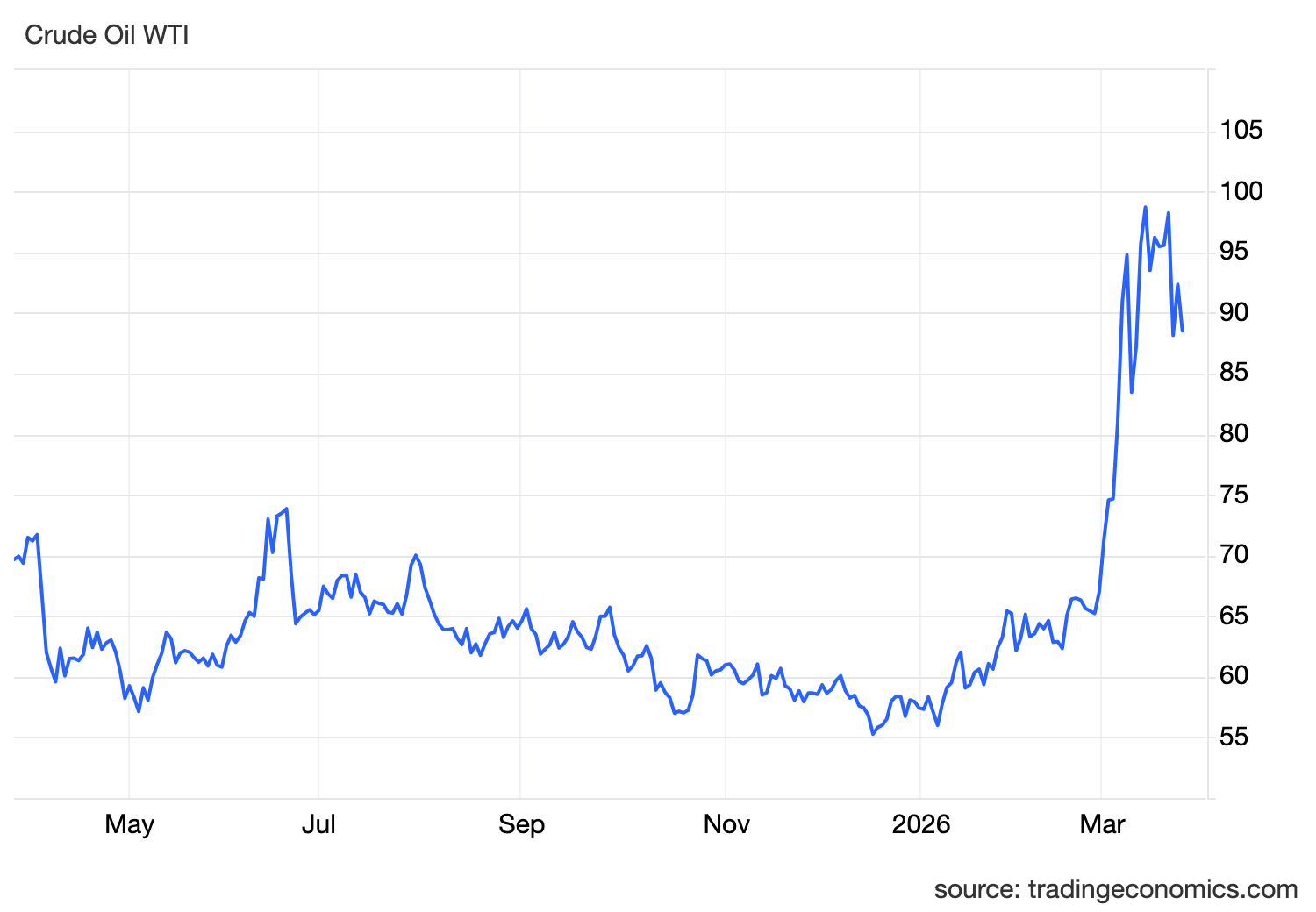
Reports that Washington is pursuing diplomatic channels to end the war with Iran shifted sentiment sharply. Israeli media indicated that the United States is seeking a one-month ceasefire to allow negotiations, while additional reports suggested a detailed proposal had been sent to Tehran outlining terms for de-escalation. These developments helped ease immediate fears of prolonged supply disruptions, particularly around the Strait of Hormuz, a critical chokepoint for global energy flows.
The move lower highlights how sensitive oil has become to shifts in geopolitical expectations. Just a day earlier, prices surged roughly 5% after Iran denied engaging in talks and signaled it would not restore normal shipping conditions, reinforcing concerns about constrained supply and escalating conflict.
Despite continued military positioning, including the deployment of additional US troops to the region, markets appear to be prioritizing the potential for diplomatic resolution over immediate escalation risk.
From a macro perspective, the decline in oil prices carries significant implications beyond the energy market. Lower crude prices reduce near-term inflation pressures, particularly at a time when central banks are already balancing slowing growth against still-elevated price levels.
For the dollar, this introduces a shift in dynamics. The recent strength in the greenback has been driven in part by rising oil prices, which lifted inflation expectations and pushed back rate-cut timelines. A pullback in oil reverses part of that logic, easing inflation concerns and reopening the possibility of earlier monetary easing.
However, the dollar does not lose all support. While lower oil weakens the inflation-driven rate argument, the underlying geopolitical uncertainty continues to sustain demand for safe-haven assets. This creates a more balanced setup where the dollar’s direction becomes more sensitive to incoming economic data and central bank guidance rather than purely oil-driven inflation fears.
Across assets, the transmission is immediate. Lower oil prices tend to support equity markets by easing cost pressures and improving growth expectations, while also allowing gold to stabilize as falling yields reduce the opportunity cost of holding non-yielding assets.
In FX markets, currencies that are heavily exposed to energy imports, such as the euro and yen, may find some relief as lower oil reduces external pressure. At the same time, commodity-linked currencies could face mixed reactions depending on whether the move in oil reflects improving risk sentiment or weakening demand expectations.
The broader takeaway is that oil is now acting as the primary transmission channel between geopolitics and monetary policy. When prices rise, inflation risk dominates and supports the dollar. When prices fall on de-escalation, that pressure eases, allowing markets to reconsider the path of interest rates.
Dollar Holds Firm as Oil Shock Rewrites the Fed Story
Bullion Holds Steady as Markets Balance War Risk and Rate Pressure
Session expired
Please log in again. The login page will open in a new tab. After logging in you can close it and return to this page.