New Offer
Receive [your product here]
Describe what benefits the customer will get from your offer.


Written by Philip Ogina
The dollar is not strong today because growth suddenly improved. It is strong because the market is being forced to price a more hostile macro mix. On Tuesday, renewed fears over Gulf supply disruptions pushed Brent back up more than 4% to about $103.94 and WTI up more than 4% to around $91.62 after Iran denied talks with the United States, reversing part of Monday’s sharp oil selloff.
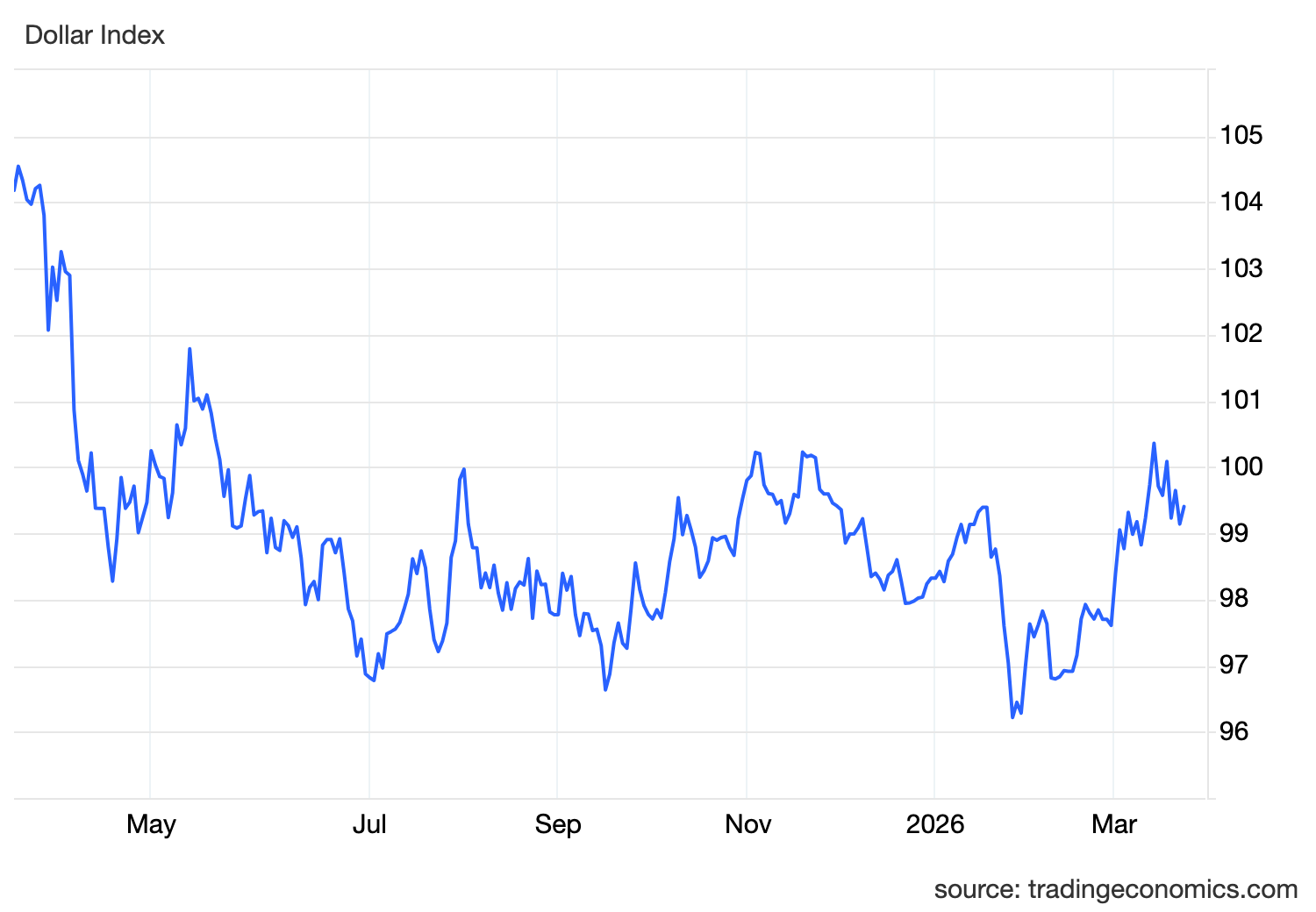
That matters for the dollar because oil is now doing two jobs at once. First, it is reviving inflation fears just as markets were trying to lean back into rate cuts. Second, it is adding a geopolitical risk premium that supports demand for safe assets. Reuters reported today that higher oil prices helped push US Treasury yields higher, with the two-year yield up to 3.91%, while the dollar strengthened alongside those moves.
This is the key shift. A few weeks ago, the softer US labor backdrop and fading inflation were supposed to keep the Fed on a gradual easing path. Now that story is being interrupted by war-driven energy inflation. Morgan Stanley last week pushed its Fed cut forecast back from June to September, joining Goldman Sachs and Barclays, specifically because the oil shock tied to the Middle East conflict is making inflation harder to ignore.
That helps explain why the dollar has stayed firm even when the headlines have looked messy. Reuters reported today that the dollar had fallen near a two-week low earlier in the week when Trump delayed strikes on Iran’s power grid, but it bounced back as oil recovered and the market questioned whether any real de-escalation was happening. In plain English, the dollar weakens briefly when war risk looks like it is cooling, then gets bought again when traders remember that energy disruption is still real.
The cleanest macro reading is this: higher oil means higher inflation risk, higher inflation risk means fewer near-term Fed cuts, and fewer cuts mean a stronger dollar. That is why this is not just an oil story or just a war story. It is a rates story now. Reuters’ global markets coverage said exactly that today, noting that persistent energy supply fears have renewed inflation concerns and strengthened the dollar as traders price a tougher rate outlook across major economies.
That shift is hitting other assets in a pretty textbook way. Gold has not been behaving like a normal war hedge because the stronger dollar and fading hopes for Fed cuts are overpowering safe-haven demand. Reuters reported that spot gold fell 1.5% on Tuesday to $4,340.63, marking a tenth straight session of losses, with the stronger dollar and reduced cut hopes doing the damage. So even in a war, gold is struggling because the market is treating the dollar, not bullion, as the cleaner defensive trade.
For equity indices, the message is also rough. When oil rises this fast, the market starts worrying about margins, consumer demand and the Fed all at once. Yesterday’s relief rally on the five-day pause in attacks showed how quickly stocks can bounce when oil drops, but today’s rebound in crude and return of inflation fear has brought that tension straight back into focus.
In FX, the euro and yen remain the most vulnerable major currencies against this backdrop because both Europe and Japan are heavy energy importers. Reuters noted that the euro and yen have been pressured by the conflict and oil shock, while Japan’s softer inflation backdrop adds another layer of difficulty for the yen. That leaves EURUSD and USDJPY as two of the most sensitive expressions of the current macro theme.
The bottom line is simple. The dollar is currently being supported by both safe-haven demand and a more hawkish rates repricing. As long as oil remains elevated and the Middle East conflict keeps supply risk alive, the greenback keeps a macro floor under it. That does not mean straight-line upside every day, but it does mean the burden of proof has shifted against dollar bears.
Gold Drops Below $4,400 as Inflation Fears and "Higher for Longer" Bets Surge
Crude Slides as Markets Price De-escalation in Iran Conflict
Session expired
Please log in again. The login page will open in a new tab. After logging in you can close it and return to this page.